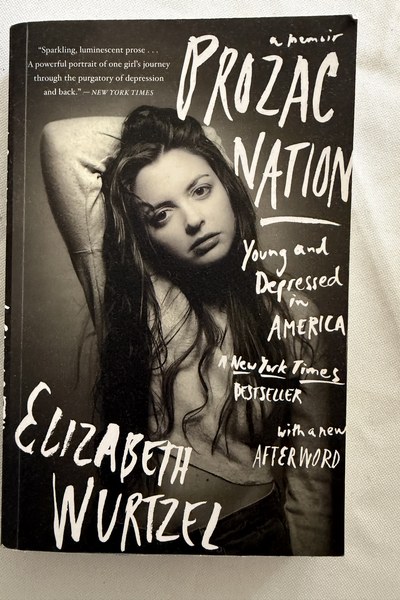
The Prozac Nation by Elizabeth Wurtel
The morning after reading the book, I wake up with a different feeling. I doubt if my thoughts on a book so impactful towards society are fair, or will it carry the bias of a critic more scientifically informed than the common reader of the underlying theme of the book - depression and mental health.
What she brings forth is a frankness of her lifestyle which many would never have dared to in the 1990’s. Her openness about her issues builds a rapport with the reader initially - Aristotle’s pathos (she mentions it herself about using it in her writing) - but as the book continues it becomes monotonous bursts of emotions, and a repetitive behaviour. It reads like teenager’s diary - who was angry about abandonment which led to trust issues as an adult. Consequently, they had relationship issues, and inability to hold emotions or be her genuine self.
Initially, I wanted to read it in one go and it looked possible because of her fast paced writing but after roughly hundred pages, I could guess what is happening in every chapter. She would be stable for a while, then meet someone and become emotionally needy before the person leaves her. I feel it’s common to have those experiences, and many of us hide behind it by trying to fit in, not talking about it, etc., but she overcame this with being herself.
It takes courage to discuss a subject so openly at a time when you could be outcast, shunned and also lose employment. This is truly creditworthy and I dare say her gift to literature. Prior to this, I had only read about perfect lives of leaders and celebrities, which were debunked later by internet theories and more information being published. So, the book does impact societal discussions about being OK with being flawed.
She has been credited to bringing the genre of writing memoirs about bad behaviour in the past. We have all been told to be ok with ourselves as we are. There is abundant wisdom and writings on this but none contain the personal details and experiences as the authoress does in this book. This is where it is really powerful, especially considering internet had yet to become commonplace for people to hide behind a keyboard anonymously and open up.
It seems like she consciously wrote about how miserable her life was, and was seeking attention from the world that her parents and adult relationships couldn’t provide. I have no experience of depression or being emotionally needy. So, I find it difficult to associate with her or judge her where I can feel honest and fully trust my assessment. But she comes across extremely needy and demanding without respect for others space. I have always found this to be so selfish, and I am probably judging her from that pedestal.
However, the best segment was her mentioning how the youth in her generation - not teens - had these mental health issues. If I correlate this with experience of my people around me in their twenties, since I was in their twenties - so for the last twenty years -, I feel most of them had the similar anxiety, and emotional instability - if I may call it so. I guess it could be an age thing amongst people who haven’t developed an emotional intelligence or emotional maturity at an early age. But this is an interesting perspective from her to read and research further.
This is relatable to most humans born who have reached their thirties. It was only four months ago in January 2026 when I was discussing depression and mental health with a friend of mine. He claimed almost everyone in our friend circle underwent such issues in their late twenties and early thirties. My argument was that it’s normal to have such emotional issues as we begin to sign our contract of being a responsible adult with society.
Even now, when I meet people in the twenties I feel they have the same issue. Nevertheless, I felt empathy for her when she had to undergo treatment in the trauma centre. I firmly believe no human should undergo such pain, it’s sad. Yes, she did generate feelings of sadness in pity but I mostly felt her story was also about attention seeking. This can be noted in her mention of Kurt Cobain, Sylvia Plath, her invitation of Oprah Winfrey and constant comparison to movie characters and randomly references popular literature.
What intrigued me on a personal level due to my own research and project in mental health was that she believed mental health discussions had already started in the 1980s. This coincides with Jonathan Franzen discussing the same thing when he had to take care of his father’s alzheimer in the early nineties. I find that intriguing because I feel even now in 2026 we don’t talk about it enough. It still contains a taboo about it.
Her choice of appreciating the boyfriend who confronts her and challenges her to overcome the difficulties over Rafe who was always sweet but deserted her when it crossed his tolerance limit highlights how cajoling and giving in always out of pity, empathy, being acceptable and kind is not a long term solution. It is just a fix.
Her relationship with Dr. Sterling begins with empathy and care, but gradually it transforms to about behaving and listening to her, and obeying her too. This is probably why she was dragged to the facility towards the end of the book and prescribed Prozac. The book does mention a lot of drugs used in mental health and as anti-depressants - I lost track of them except for Mellaril and Prozac.
Probably, the book’s most important takeaway is that mental health should veer more towards care with slight refusal - or care with refusal - as she demonstrates in her appreciation of the confrontational boyfriend and her relationship with Dr. Sterling.