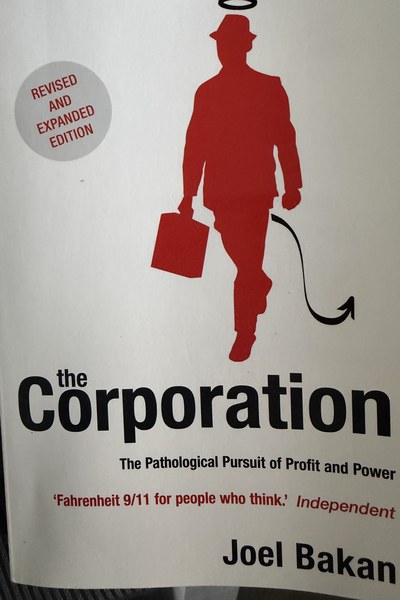
The Corporation by Joel Bakan
New ideas and understanding of corporation spring forth in Joel Bakan’s The Corporation. He presents facts from historical precedents about Ford’s lawsuit from his partners, General Motors’ misalignment of fuel tanks to save cost to emphasise that corporations exist to maximise profit. They have all done that, and are opportunist when they promote newer ideas like Corporate Social Responsibility to achieve its only aim - profit maximisation. Bakan further highlights the difference between humans and a corporation through the process of their creation. Corporations are borne out of papers to help humans avoid their share of responsibility if they fail. It is a natural progression of the Enclosure acts which abolished the capital punishment for bad debtors.
In pursuit of this, they are backed by governments who have the power to abolish/dissolve them but rarely - if ever - have executed these rights. The governments backed East India Company with military power to flourish in their colonies. Unsurprisingly, such incidents continue today with companies like Shell, Exxon, Heineken, etc. continue to operate in unwanted territories. Latest recorded and undisputed example is about British Petroleum in Iran in the second half of the twentieth century. The exploitation reached a limit when the embassy required military protection - all for an oil and gas corporation.
Corporations today have become synonymous with evil, greed and profits at all cost. Like the traders who were more excited about saving their clients’ gold positions rather than escaping the building during the 9/11 mishap. However, in their relentless pursuit they have also provided opportunities for students who became sponsors for a credit card company. Their sponsorship came with responsibilities of getting a minimum C grade and not indulging in anti-social activities, promoting the card with proper explanation of responsible credit system. They benefited enough and ideating for a homeless person to market a radio station.
It also mentions positive aspects of capitalism and corporation too. Corporations can also do good like Henry Ford reducing price for his cars, Pfizer building a complete town near New York City over a century, and oil and gas companies negotiating with the natives. Another example is about Kathy Lee Gifford who ensures that all the workers in the sweatshops manufacturing her brand are fairly paid by market value after becoming aware about their plight and inhumane working conditions. Then there is also the conflict The Body Shop founder had, and rightfully stepped away when the conflict became big. I wish more founders and CEO’s behaved this responsibly towards society or genuinely increased their responsibility towards society.
It doesn’t need a lot of attention because many points are repetitive with their conclusion. This is its biggest pitfall because it jumped on incidents to highlight bad corporate behaviour - how Ford used precise numerical calculations to justify their shift of its Pinto fuel tank for enhanced profits -, shareholder priority - Ford getting sued by his partners who later on incorporated Doge -, and others.
The book remains superficial throughout but could be a good lesson curriculum in commerce for age 16-17 group of children. He cites the East India company and mentions that Corporations were first incorporated more than four centuries ago - and Adam Smith warned against them -, but he fails to build a story around so much history and incidents through a chronology.
Historical books have done more to explain Corporation, their greed, Capitalism and shareholder values than this book. But, Bakan gains credit to re-educate the reader about a corporation - its a legal identity that can be closed or shut down. In the ubiquity of corporate presence in our daily lives, we have forgotten this possibility. And we should be exercising this more often than we do now to corporations that forsake societal good for maximising profits.
Bakan's does make it feel that the corporation’s powers are more restrictable and not untameable.