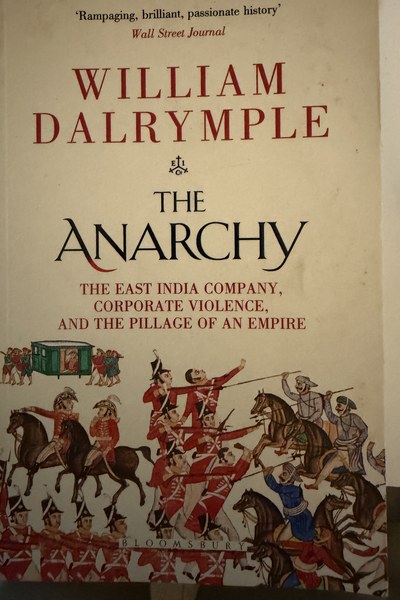
The Anarchy
It could and most likely will become an influential book for nationalist Indians in the future. It is divisive in nature, and as a typical book is biased towards only one side of the story. While it beautifully presents the book from the conquered narratives, it fails to showcase or even mention some positive impact from the wars. It tries its best to portray the French as benevolent and more sympathetic to the cause of Indians, but conveniently ignores to detail their mercenaries active in the Indian battle.
Written with a full bias of the declining Mughals, it does present me a few unknown facts about the Marathas’ and the Sikhs and their banditry raids into Mughal lines. It is interesting to learn about it, but not surprising for every megalomaniac took fools in his armies to go and loot. These thugs and robbers after a while made a base of scared civilians and started to call them their nations. This is the only constant in recorded human history from Japan to Britain, India to USA. First, you create violence to scare the common man, disrupt the status quo, build up a fanfare amongst these scared people and then reinvent the wheel of civilisation under a different name of country, religion or ‘what you will?’
Then suppress information that can counter the opinion about you in public.
While it glorifies or makes every attempt to glorify the Mughal, its bigger impact if presenting a more truer or believable description of Aurangzeb. While the common belief is that Aurangzeb was butchering hindus, this book does present new facts about how the Hindus were free to do as they pleased. The atrocities were mostly done on rebel hindus who sided with the Marathas and tried to bring a civil revolution. This is no different to what has happened in history.
Isn’t it strange that the book also mentions how bankers - Jagat Seths, Gopaldas, etc. -, were financing either sides at their convenience to always side with the victorious. It is hilarious how this part of Indian history may have impacted the western banking system when Rothschild’s allegedly started funding the wars in the West. How stupid are we humans is the question to be asked that we kill, rape and loot in the name of an ideology?
Another repeating aspect of the book is how it explained the destruction of the weaving industry of Bengal by EIC? Isn’t that how colonialism and todays’ off shore industry works? Tidbits into the caste system also highlight how British made it more rigid than it was.